|
 |
|
ONE BRONZE ARROWHEAD
|
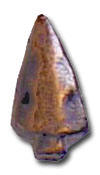
INTRODUCTION: It has not been easy to ensure that the Official History of the 503d Parachute RCT in World War II is an accurate one. Contrary to popular misconception, Washington is not all about getting things right - just about getting things. Unlike the Airborne Divisions of the ETO, which came with every Headquarters, Supply, Ordnance and Intelligence accessory known to the army Table of Organization and Equipment, and a coterie of well-connected Officers of field rank who were each naturally motivated to record their commands for posterity, the 503d was a bastard unit in the Pacific - it had no fathers in the Pentagon, no rich uncles in Congress, and very few career cousins. The 503d was commanded by a Colonel, and did not have its own supply chain - its supplies literally had to be begged, borrowed and ,at times, stolen. One of the continuing effects of this was that when it came to recording the history of the Airborne in the SWPA, the 503d was again given short shrift. It had been ruined as a premier fighting unit in Negros, where it had been called upon to do the work of a heavier equipped unit. Then, post-war, it was summarily deactivated, and its personnel were assigned to the 11th Airborne and garrison duty in Japan. There was another, more insidious effect - in the corridors of power of the Pentagon, it lacked representation of general field rank to fight for its entitlements. One of the sore points, indeed a sore point which stayed forever with the men of the 503d, and never healed, was the denial of the bronze arrowhead for the Nadzab, Noemfoor and Mindoro assaults. What was particularly galling was that many units in the Mindoro taskforce, units which fulfilled lesser roles, but had better connections inside Washington, were awarded the arrowhead for the Mindoro amphibious assault- but not the 503d Parachute RCT.
|


 The award of the
Bronze Arrowhead to be worn on the theater ribbon is limited to one
arrowhead for each individual. The award was made for an assault
landing, either by sea or by air. The 503rd Parachute Infantry Regiment made assault landings at
Nadzab and Noemfoor. The unit was then enlarged to a combat team with
the addition of the 462nd Parachute Artillery Battalion and the 161st
Parachute Engineer Company. The combat team made assault landings on
Mindoro and Corregidor. The team entered Negros after the initial
assault had been made. Still, it would be interesting to know if the
units of the 40th Infantry Division received the assault award for their
unopposed landings on Negros.
The award of the
Bronze Arrowhead to be worn on the theater ribbon is limited to one
arrowhead for each individual. The award was made for an assault
landing, either by sea or by air. The 503rd Parachute Infantry Regiment made assault landings at
Nadzab and Noemfoor. The unit was then enlarged to a combat team with
the addition of the 462nd Parachute Artillery Battalion and the 161st
Parachute Engineer Company. The combat team made assault landings on
Mindoro and Corregidor. The team entered Negros after the initial
assault had been made. Still, it would be interesting to know if the
units of the 40th Infantry Division received the assault award for their
unopposed landings on Negros.
For all their combat the 503rd units were awarded but one Bronze Arrow-head during WWII. The men who served faithfully did not receive credit for an assault unless they jumped on Corregidor. The reason given by the Military Awards Branch was “lack of enemy opposition”. This reasoning applied only to combat units, as revealed in the Mindoro correspondence.
It would be difficult to convince the wife and children of John Parker, who died in the jump, that this was not combat. Some in the Awards Branch were not convinced. Parker was awarded the Purple Heart, posthumously. The same is true of two others killed in the jump and of the eight men killed by enemy action. Sergeant Edward W. Wojewodzic, B Company, was awarded the Army's second highest award for "extraordinary heroism", the Distinguished Service Cross, posthumously. A number of other medals for gallantry and heroism were also awarded. The award of the Combat Infantryman's Badge was awarded to all troopers who jumped at Nadzab. The same is true for replacements who saw their first action in the other places. The wording of the orders awarding the Badge was, "for exemplary conduct in action against the enemy." The casualties of the jump at Noemfoor were so excessive that the jump of the 2nd Battalion was cancelled.
After stating that the reason for not giving the Arrowhead credit for the Mindoro assault was the lack of ground and naval opposition, the Military History Center (in seeking to justify the Military Awards Branch's decision) has ignored the fact that Japanese Admiral Kimura led his fleet of two cruisers and five destroyers in an attack on the Mindoro Beachhead the night of 26 December 1944. The 7th U.S. Fleet was given the mission of protecting the Mindoro beachead; however, they had moved far to the north uncovering the American positions. Like General MacArthur, they had discounted reports of a Japanese fleet moving in from the French Indo-China region. The Japanese fleet did considerable damage to ships in the area and shot down 26 U.S. planes. The valiant effort of the U.S. Army Air Force and one Navy PB4Y-1 (a B-24 with a single rudder) inflicted enough damage so that the fleet withdrew. The Navy pilot, Lt. Paul F. Stevens, disobeyed orders in attacking the Japanese fleet. His superiors considered court-martialing him but awarded him the Navy Cross. Nevertheless, the American troops were subjected to a 23 minute naval bombardment - the first inflicted upon our forces by the Japanese since Guadalcanal.
The following copies of correspondence need no comment. They also disclose other problems with the Military History Center. Even today, over 50 years later, it is hard for many of us to accept the rulings of the Awards Branch and the History Center's ludicrous efforts to uphold the validity of these rulings. We joke about the Marine Corps' objective to award every deed of bravery. Say what we may, the Marines love their Corps. In turn the Corps takes care of its own. We love the Army, too.
The first document is General Orders Number 100, War Department, Washington, D.C. entitled "Units Credited with Assault Landings."
This decision was made in Washington and not in the area of operation. The following is a section of this order:

|


The task force consisted of about 20,000 men. About 5,000 (25 percent) were awarded the Bronze Arrowhead for making an assault. But not the 503d. Why was that?